Learn Italian through stories
Start learning Italian free — the easy way for beginners. With comprehensible input, you meet new words inside warm, slow stories with Sofia in the village of Dozza, then prove you understood. Understand real Italian from day one — no grammar drills, no flashcards of stock photos.
What you’ll learn (A1, for beginners)
Start from zero. Each topic comes from a story, so you meet it in context — then prove you understood.
Greetings & introductions
Say who you are, where you’re from, and meet the family.
Numbers 1–100
Count, tell prices, and build numbers instead of memorising them.
Family & people
madre, padre, fratello, sorella — and where everyone lives.
The bar & breakfast
caffè, pane, biscotti — order and chat over a slow morning.
The market & shopping
Buy food stall by stall, ask prices, a little friendly bargaining.
Telling the time
The hours of the day — “apre alle otto”, seven in the morning.
Everyday objects
Set the table: plates, glasses, forks, knives, spoons.
Likes & preferences
mi piace / non mi piace — say what you like and what you don’t.
Italian stories & songs
Every long-format Italian story and song — open an episode to watch and learn, then practise in the app.
Prefer reading? Read three complete stories with English translation ›
Stories


Songs (filastrocche)




Search the library
Italian Story A1 #01 | Good Morning, Sofia (Start Here)
Italian Story A1 #01 in Sofia's ordered beginner path — a slow Italian listening story about simple greetings, names, and your very first words of Italian.
Italian Story A1 #02 | At Nonna’s Trattoria
Italian Story A1 #02 in Sofia's ordered beginner path — a slow Italian listening story about family, food, and a morning at Nonna's trattoria.
Italian Story A1 #03 | Good Morning from New York
Italian Story A1 #03 in Sofia's ordered beginner path — a slow Italian listening story about family, a video call, and greetings across the ocean.
Italian Numbers 1–100 A1 #04 | Counting with Sofia
Italian Story A1 #04 in Sofia's ordered beginner path — a slow Italian listening story about numbers and counting from 1 to 100.
Italian Market Vocabulary A1 #05 | At the Market
Italian Story A1 #05 in Sofia's ordered beginner path — a slow Italian listening story about shopping at the market — food, prices, and quantities.
Cooking with Nonna A1 #06 | Something’s Missing
Italian Story A1 #06 in Sofia's ordered beginner path — a slow Italian listening story about cooking with Nonna and the words for a kitchen that's missing something.
Italian Story A1 #07 | Morning at the Trattoria
Italian Story A1 #07 in Sofia's ordered beginner path — a slow Italian listening story about morning greetings, the café, and chatting with Signor Gianni.
Italian Story A1 #08 | Lunch at the Trattoria
Italian Story A1 #08 in Sofia's ordered beginner path — a slow Italian listening story about lunchtime at the trattoria — food, the table, and serving.
Italian at University A1 #09 | Sofia’s Day on Campus
Italian Story A1 #09 in Sofia's ordered beginner path — a slow Italian listening story about university life — the campus, classes, and the late bus.
Italian Story A1 #10 | Directions with Beppe
Italian Story A1 #10 in Sofia's ordered beginner path — a slow Italian listening story about directions, places in town, and small errands in Dozza.
Italian Story A1 #11 | Marco’s Surprise Visit
Italian Story A1 #11 in Sofia's ordered beginner path — a slow Italian listening story about family, a surprise visit, and catching up over coffee.
Italian Story A1 #12 | A Gift for Nonna
Italian Story A1 #12 in Sofia's ordered beginner path — a slow Italian listening story about a birthday gift, simple opinions, and colors.
Italian Introduction Song A1 | Sono Sofia
Italian Song A1 from Episode #1 of Sofia's ordered beginner story path.
Italian Breakfast Song A1 | Caffè, pane, biscotti
Italian Song A1 from Episode #1 of Sofia's ordered beginner story path.
Italian Family Song A1 | La mia famiglia
Italian Song A1 from Episode #1 of Sofia's ordered beginner story path.
Italian Time Song A1 | Apre alle otto
Italian Song A1 from Episode #2 of Sofia's ordered beginner story path.
Italian Kitchen & Numbers Song A1 | Sei piatti
Italian Song A1 from Episode #2 of Sofia's ordered beginner story path.
Italian Numbers Song A1 | Dieci dita Count to Ten
Italian Song A1 from Episode #2 of Sofia's ordered beginner story path.
Italian Greetings Song A1 | Piacere, mi chiamo...
Italian Song A1 from Episode #3 of Sofia's ordered beginner story path.
Italian Heritage Song A1 | Lontana e vicina
Italian Song A1 from Episode #3 of Sofia's ordered beginner story path.
Italian Numbers Song A1 | La famiglia del tre
Italian Song A1 from Episode #4 of Sofia's ordered beginner story path.
Italian Numbers Song 1–100 A1 | Fino a cento
Italian Song A1 from Episode #4 of Sofia's ordered beginner story path.
Italian Shopping Song A1 | Quanto costa?
Italian Song A1 from Episode #5 of Sofia's ordered beginner story path.
Likes & Dislikes Song A1 | Mi piace, non mi piace
Italian Song A1 from Episode #5 of Sofia's ordered beginner story path.
Italian Market Song A1 | Il mio mercato
Italian Song A1 from Episode #5 of Sofia's ordered beginner story path.
Italian Morning Song A1 | Tre cose, una mattina
Italian Song A1 from Episode #6 of Sofia's ordered beginner story path.
Funny Italian Song A1 | Quasi! Cooking with Nonna
Italian Song A1 from Episode #6 of Sofia's ordered beginner story path.
Italian Cooking Song A1 | La cucina di Nonna
Italian Song A1 from Episode #6 of Sofia's ordered beginner story path.
Funny Italian Song A1 | La pizza è per i turisti
Italian Song A1 from Episode #7 of Sofia's ordered beginner story path.
Easy Italian Song A1 | Come sempre
Italian Song A1 from Episode #7 of Sofia's ordered beginner story path.
Italian Food Song A1 | Tutti a tavola
Italian Song A1 from Episode #8 of Sofia's ordered beginner story path.
Easy Italian Song A1 | Dov’è l’anima
Italian Song A1 from Episode #9 of Sofia's ordered beginner story path.
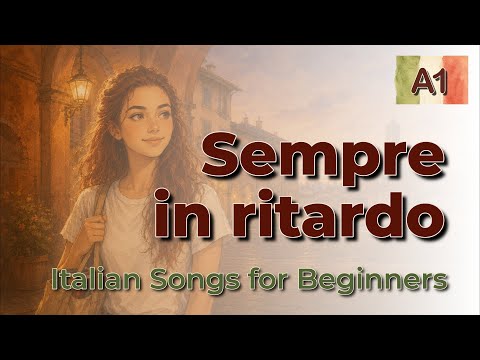
Italian Time Song A1 | Sempre in ritardo
Italian Song A1 from Episode #9 of Sofia's ordered beginner story path.
Italian Directions Song A1 | Sempre dritto
Italian Song A1 from Episode #10 of Sofia's ordered beginner story path.
Easy Italian Song A1 | Tutto a posto
Italian Song A1 from Episode #10 of Sofia's ordered beginner story path.
Easy Italian Song A1 | Oggi siamo qui
Italian Song A1 from Episode #11 of Sofia's ordered beginner story path.
Easy Italian Song A1 | Zitti zitti
Italian Song A1 from Episode #11 of Sofia's ordered beginner story path.
Italian Colors Song A1 | I colori di Nonna
Italian Song A1 from Episode #12 of Sofia's ordered beginner story path.
Italian Gift Song A1 | Il regalo giusto
Italian Song A1 from Episode #12 of Sofia's ordered beginner story path.
Learning Italian through stories — common questions
Can I really learn Italian just by watching stories?
Yes — it’s how you learned your first language. The method is called comprehensible input: when you understand a message, helped by pictures, context and Sofia’s slow, clear voice, your brain quietly absorbs the words and patterns inside it. You’re not memorising rules, you’re understanding Italian — and it sticks because it arrived with meaning.
Is this good for absolute beginners?
It’s built for day one. Every story starts at A1 and moves slowly, reusing the same core words — greetings, numbers, family, the bar, the market — so an absolute beginner can follow along and feel real Italian make sense from the very first episode.
How is this different from Duolingo?
No streaks, no buzzers, no panic. Instead of translating disconnected sentences, you spend your time understanding a real little story with Sofia and Nonna in Dozza. It’s the calm, grown-up way in: meaning first, then a gentle check that you got it — not a game that punishes you for missing a day.
Do I need to study grammar?
Not up front. You meet grammar the way children do — inside stories you understand, again and again — so the patterns settle in before anyone names them. You can always look a rule up later, but you won’t be drilling conjugation tables to get started.
How long until I can understand Italian?
It depends on you, but the honest answer is: sooner than you’d expect, if you’re consistent. A few short stories a week beats a once-a-month marathon. Many learners are comfortably following slow, clear Italian within a few weeks — and because each new story reuses old words, every episode is a little easier than the last.
Is it free?
Yes — every story and song is free to watch on YouTube, and free to read here with the full Italian transcript. The learning app — the comprehension checks and the retention layer that passive watching can’t give you — is open now, and the first three chapters are free.