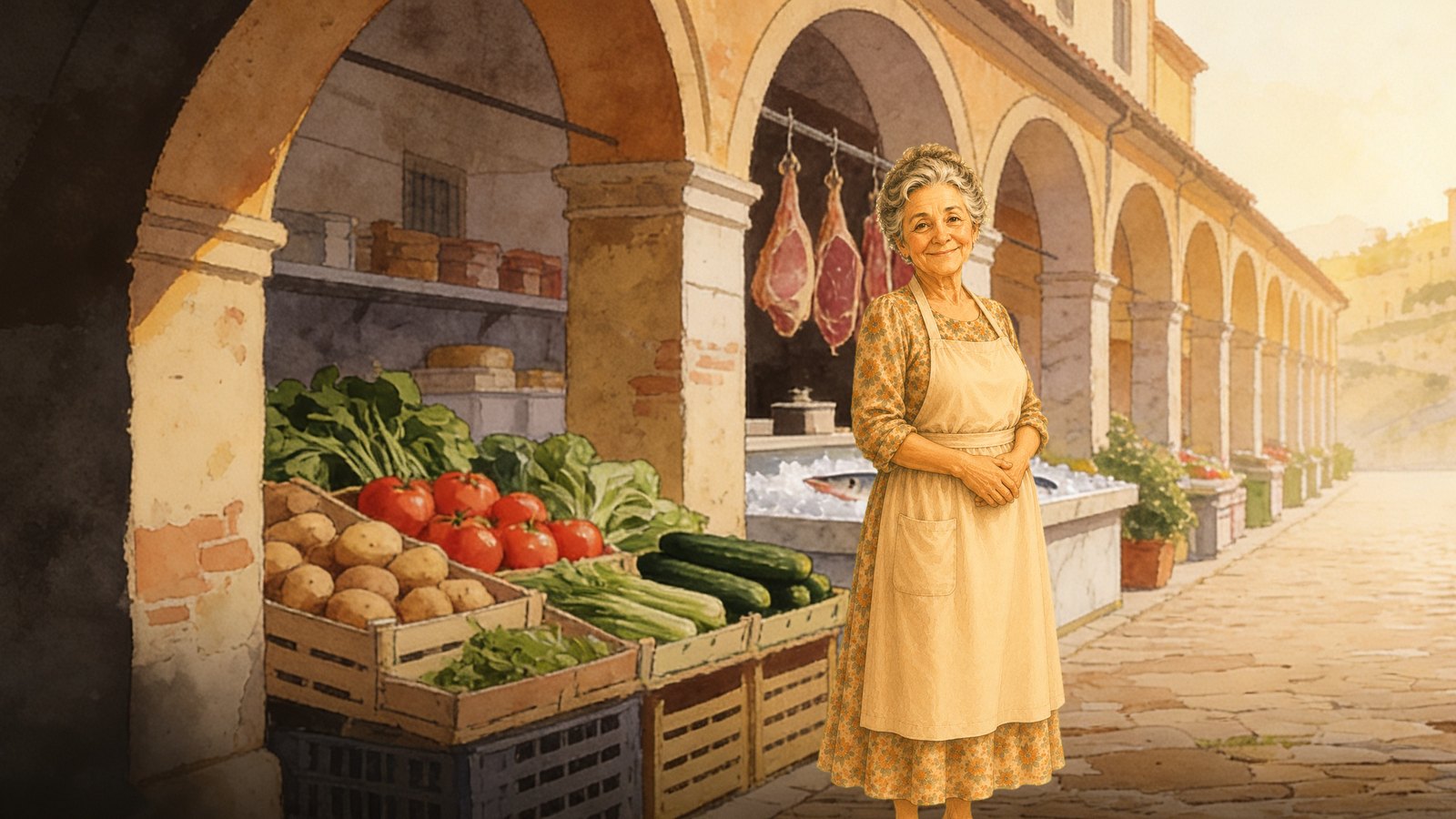
A restaurant is often where a trip becomes real: the chalkboard menu you cannot quite read, the waiter waiting kindly, the smell of coffee after lunch. The best Italian phrases for restaurants are not a long script to memorize. They are a small set of useful sentences that lets you ask, choose, and enjoy the meal without panic.
You do not need perfect pronunciation to be understood. Speak a little more slowly than feels natural, begin with buongiorno or buonasera, and let the exchange be simple. Most restaurant conversations follow a familiar pattern, which makes them a good place to practice the Italian you already know.
The best Italian phrases for restaurants
Start with greetings. Buongiorno means “good morning” or “good day” and works until later in the afternoon. Buonasera means “good evening.” In a casual setting, ciao may be fine, but buongiorno and buonasera are a safe, polite choice when you arrive.
If you are unsure of a word, say Mi scusi, meaning “excuse me.” It is one of the most useful small phrases in Italian. You can use it to get attention politely, ask someone to repeat themselves, or begin a question.
A good general pattern is Vorrei..., meaning “I would like...” The ending sounds roughly like vohr-RAY. It is polite, direct, and flexible. You can use it for a table, a dish, water, or coffee.
Booking a table
If you plan to call ahead, keep the conversation short. State what you need, then listen for the time and any follow-up questions. These phrases will cover most reservations:
- Vorrei prenotare un tavolo per due. - I would like to reserve a table for two.
- Avete un tavolo per due stasera? - Do you have a table for two tonight?
- A che ora? - At what time?
- Per le otto, per favore. - For eight o’clock, please.
- A nome di Smith. - Under the name Smith.
Un tavolo per due is a table for two. Change due to tre for three, quattro for four, and so on. If you are calling from the United States before your trip, it can help to write down the date, day, time, and your name in advance. Numbers can feel harder when they arrive quickly over the phone.
When you walk in, say Ho una prenotazione a nome di... for “I have a reservation under the name of...” If you do not have one, ask C’è un tavolo libero? This means “Is there a free table?”
At the table
Once you sit down, you may hear Ecco il menu, meaning “Here is the menu,” or Avete scelto?, meaning “Have you chosen?” If you need another minute, say Possiamo avere ancora qualche minuto? - “Can we have a few more minutes?” A shorter version, Ancora un minuto, per favore, is also useful.
For water, ask Acqua naturale o frizzante? Natural water is still water. Frizzante is sparkling water. You can answer Naturale, per favore or Frizzante, per favore. If you would like tap water, ask politely: Possiamo avere acqua del rubinetto? Some restaurants will serve it, while others may prefer bottled water. It depends on the place, so treat the answer as local custom rather than a personal refusal.
Bread may arrive automatically. In many parts of Italy, you may see a coperto on the bill. This is a per-person cover charge, often connected with bread and table service. It is normal in many restaurants, but practices vary by region and restaurant.
Ordering with confidence
The menu may be divided into antipasti for starters, primi for pasta, risotto, or soup, and secondi for main dishes such as meat or fish. You do not have to order from every section. A pasta dish and a shared starter may be plenty, especially at lunch.
To order, use Vorrei... followed by the item. For example: Vorrei le tagliatelle al ragù. If you are choosing two dishes, say Per me..., meaning “For me...” This is especially natural when everyone at the table is ordering in turn.
You can also use these practical questions:
- Che cosa mi consiglia? - What do you recommend?
- Qual è il piatto del giorno? - What is the dish of the day?
- È piccante? - Is it spicy?
- Che cos’è? - What is it?
- Senza... - Without...
The last phrase is helpful but limited. Senza formaggio means “without cheese,” and senza carne means “without meat.” If an allergy is involved, be clear rather than relying on a casual substitution. Say Sono allergico a... if you are male, or Sono allergica a... if you are female: “I am allergic to...” Then name the ingredient if you can. You can add È possibile mangiare questo piatto? - “Is it possible for me to eat this dish?”
For dietary preferences, Sono vegetariano and sono vegetariana mean “I am vegetarian,” depending on whether the speaker is male or female. The same pattern works for vegan: sono vegano or sono vegana. Restaurants differ in what they can adapt, particularly with traditional dishes prepared in advance. Asking calmly gives the staff room to tell you what is genuinely possible.
When you did not understand
This is the moment many beginners fear, but it is also where one honest phrase helps most. Say Non ho capito - “I did not understand.” Then try Può ripetere, per favore? - “Can you repeat, please?”
If the person is speaking too quickly, say Più lentamente, per favore. It means “More slowly, please.” These are not embarrassing phrases. They show that you are trying to take part in the conversation. Most people respond well to that.
You can also point to the menu and ask Questo, per favore - “This, please.” Pointing is not a failure. It is a normal support when a menu contains new food words, regional names, or handwriting that even experienced Italian learners may find difficult.
Asking for the bill
When you are ready to leave, ask Il conto, per favore. This is “The bill, please.” In Italy, you may need to ask rather than expecting the bill to appear as soon as the plates are cleared. There is no need to rush unless the restaurant indicates otherwise.
To ask whether cards are accepted, say Posso pagare con la carta? - “Can I pay by card?” If you are splitting the bill, Possiamo pagare separatamente? means “Can we pay separately?” Some restaurants can do this easily; others may not, especially for a large group. Asking early and accepting the answer graciously keeps things easy.
Finish with Grazie mille - “Thank you very much” - or Buona giornata during the day and Buona serata in the evening. These small closing phrases leave a warm impression.
Learn the phrases as small scenes
A phrase is easier to remember when it belongs to a moment you can picture. Instead of repeating Il conto, per favore in isolation, imagine the quiet end of dinner at Nonna Elena’s trattoria in Dozza. You have finished your meal, Beppe is nearby, and you are ready to pay. The words have a reason to be there.
That is why short, connected scenes can be gentler than flashcards of stock photos. In the bilingual book from Stories with Sofia, Italian appears beside English in a continuing family world, with speaking practice from the first lesson and missed words returning later. You are not expected to perform on command. You meet useful language again until it begins to feel familiar.
Before your next restaurant meal, choose just three phrases: one for arriving, one for ordering, and one for paying. Say them aloud a few times. A little preparation can turn the waiter’s first question from a test into the beginning of a good evening.